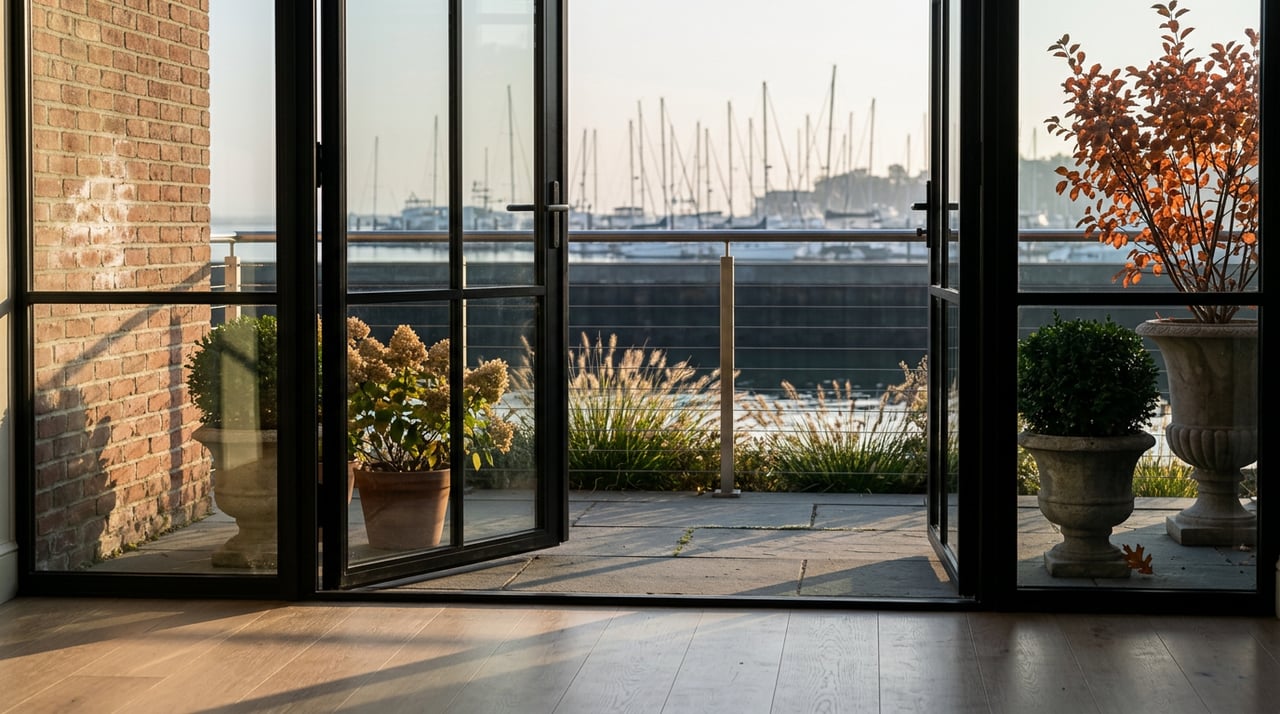
Walk the Harborwalk from Long Wharf to Rowes Wharf on a Tuesday in mid-October and you'll notice something that doesn't show up in any seasonal guide. The ferries are gone. The restaurants are full. The park benches are empty at noon and packed by six. Nothing about the neighborhood looks like it's ending, and yet one of its defining features, public ferry access to the harbor islands, has already shut down for the year.
That's the thing about the Waterfront that a visitor never catches and a resident eventually learns by accident. This neighborhood doesn't wind down in one motion the way a beach town does after Labor Day. Its outdoor programming and island ferry service wind down on separate calendars, and the gap before the neighborhood's public calendar restarts is the closest thing this stretch of harbor has to a quiet season.
The First Ending: Labor Day Takes the Outdoor Programming
The earliest cutoff belongs to the hotels. Boston Harbor Hotel's outdoor summer series, its Blues Barge jazz concerts and Summer in the City movie nights on the water, wraps around Labor Day weekend, same as it does every year. If you live in one of the towers along Rowes Wharf or India Wharf, you already feel this one. The evening soundtrack changes before the weather does.
That's the first shutdown, and it's the easiest to miss because nothing about the harbor itself changes yet. The boats are still running. The patios are still full. It's a programming decision, not an access decision, and it's the kind of thing only someone who actually lives within earshot would register as a season marker at all.
The Second Ending: October 12 Takes the Island Ferries
The second cutoff is bigger, and it's the one most residents assume is the only one. Peddocks Island's public ferry service ends for the season on October 12, Columbus Day, or Indigenous Peoples Day depending on which sign you're reading at the dock. After that, the island that most Waterfront residents have visited at least once for a hike or a Fort Andrews tour is off the map until next June.
This year's islands calendar was more complicated than usual. Georges Island didn't even reopen on its normal spring schedule. A water main serving the island failed, forcing a full closure the prior season, and ferry service only resumed on May 15, 2026, after the Department of Conservation and Recreation completed repairs to the line. The state marked the return with a free ferry weekend on May 30 and 31, and full summer service, including the Peddocks Island run, didn't kick in until June 15. Spectacle Island had its own asterisk too: at the start of the season it was reachable only by private boat, kayak, or dinghy while its own infrastructure work continued.
Then in July, the season got interrupted again. Sail Boston 2026 brought the Parade of Sail through the harbor as part of the country's 250th anniversary events, and Boston Harbor Islands suspended ferry service from Long Wharf North to both Georges and Spectacle Island from July 11 through 15, so the harbor could handle tall ships instead of tour boats. Regular service didn't resume until July 16.
None of this is the kind of detail that shows up on a generic "things to do this fall" list, but if you live here it explains a specific and recurring frustration: the ferry schedule that feels unreliable isn't actually unreliable, it's just absorbing a full season's worth of infrastructure repairs and citywide events before it even gets to its normal October close. By the time Peddocks shuts its gate for the year, the 2026 islands season has already been rerouted twice.
What Doesn't Leave With the Boats
Here's the part that separates a resident's understanding of this neighborhood from a tourist's. The ferry gate closing doesn't mean the Waterfront goes quiet. It means the neighborhood's center of gravity shifts from the water to the buildings that sit right next to it.
Chart House, on Long Wharf, occupies the oldest surviving structure on the wharf itself, the former John Hancock Counting House, and its dining room doesn't care what the harbor is doing in October. A few doors down, State Street Provisions sits at the corner of State and Atlantic, in a spot the owners describe as picking up where the old fishermen's taverns left off. Around the bend at Rowes Wharf, the Sea Grille keeps its harborside patio open through the warmer stretch of fall, a space that holds roughly ninety guests outside and another hundred inside, and Executive Chef David Daniels doesn't switch the menu just because the last ferry to Georges Island has already sailed.
So the honest way to describe early-to-mid October here isn't "quiet." It's a neighborhood where one entire category of activity, island ferry service, disappears for the winter while everything built to face the harbor keeps running exactly as it was. If you're new to the Waterfront and you assume the empty ferry dock means the neighborhood has gone into hibernation, you'll miss the fact that the sidewalk tables are still full an hour later.
The Quiet Stretch, and the Restart
Between the last ferry and the neighborhood's next real public moment sits a stretch that most residents experience as a lull without quite naming it. The Friends of Christopher Columbus Park typically hold their Fall Festival sometime in this window, a family afternoon of games, crafts, and costumes on the park's lawn that gives the neighborhood one more outdoor gathering before the light really starts to go.
Then, in late November, the park becomes the setting for the neighborhood's next major gathering. The Boston Parks and Recreation Department and the Friends of Christopher Columbus Park host what will be the 24th annual Trellis Lighting, illuminating 260 feet of trellis near the Marriott Long Wharf Hotel and scattered through the rest of the park. H.P. Hood sponsors the evening, pouring eggnog while the Marriott hands out hot chocolate and cookies, and Santa Claus and Rudolph make their traditional appearance. It's the moment the neighborhood's public calendar restarts after weeks of running on restaurant reservations and Harborwalk foot traffic alone.
Count the days and the gap is real. From the Peddocks Island cutoff on October 12 to a Trellis Lighting in the back half of November is roughly six weeks, the longest stretch of the year without a headline event tied to the harbor itself. It isn't a dead season. It's a neighborhood running on its indoor economy while it waits for the outdoor one to reopen in a completely different form.
What This Means If You're Already Here
If you already live along Long Wharf or Rowes Wharf, the practical use of knowing this pattern is timing. It's the stretch to walk the Harborwalk without competing for space with ferry lines, the six weeks when the rose garden tucked into the north end of Christopher Columbus Park, easy to miss if you're only passing through on the way to the Aquarium, is at its most peaceful. It's also the window when booking a table at the Sea Grille or Chart House on a Friday night is markedly easier than it was in August, since the tourist traffic that follows the ferries has thinned out even as the restaurants themselves haven't slowed down.
It's also useful if you're hosting. Out-of-town guests who show up expecting an island day trip in late October will be disappointed, and steering them toward the Trinity Church-to-Aquarium walk instead, or toward a table at State Street Provisions with a harbor view, saves everyone the confusion. The neighborhood didn't close. It just changed which door is open.
We've written before about how the Harborwalk itself shapes daily life on this stretch of harbor, from tide-dependent walking routes to which buildings actually deliver on their promised water views, in our earlier piece on waterfront living in Boston's harbor district. This seasonal pattern is part of the same rhythm, just measured in weeks instead of building amenities.
The Whaley Ring Team works this stretch of the Waterfront year round, through the ferry season and the six-week lull after it. If you're already living here and curious what these seasonal shifts mean for the value or timing of a move within the neighborhood, request a confidential market consultation whenever you're ready to talk.